
Are Standing Desks All They're Cracked Up To Be?

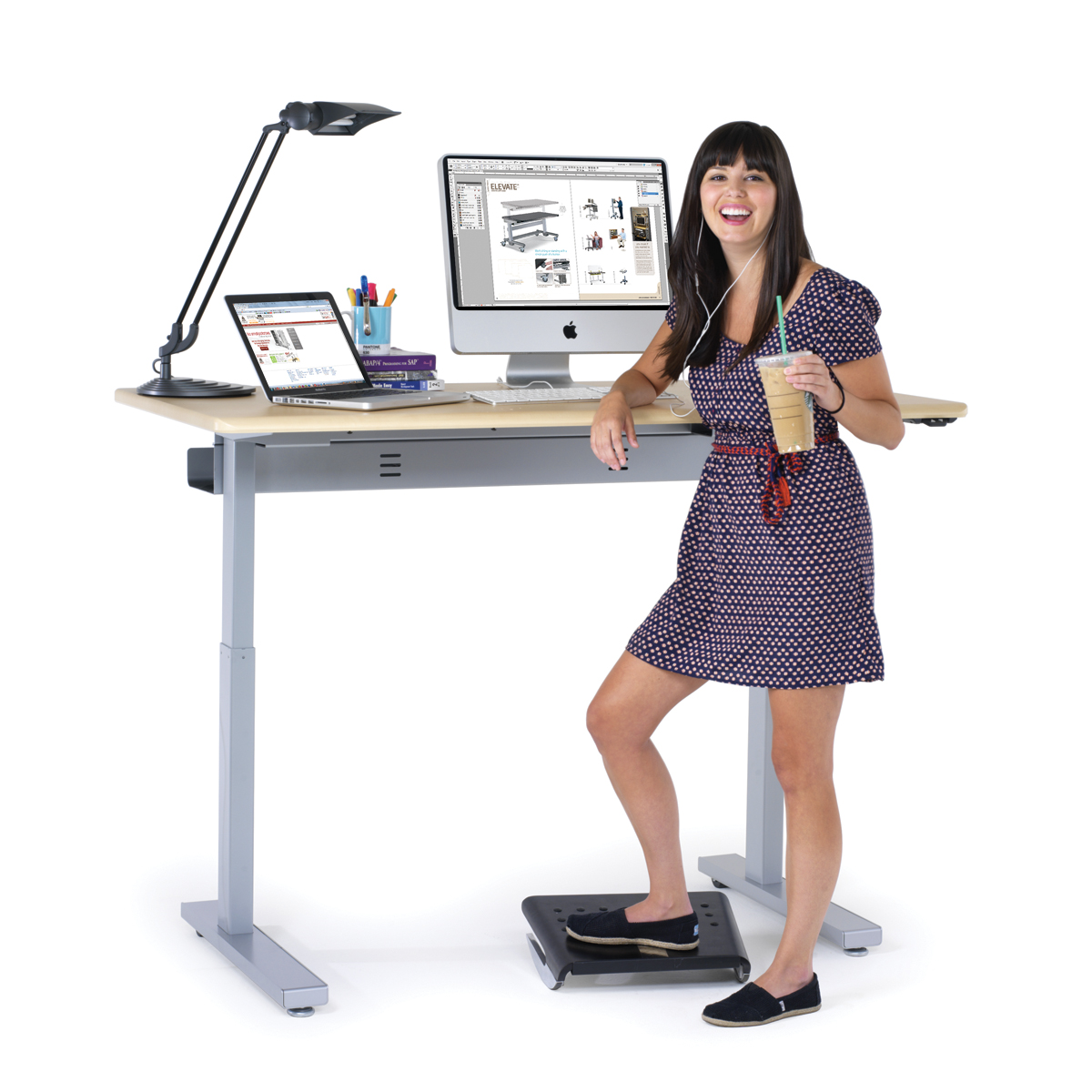
Image from Google Images "standing desk"

Image from Google Images "standing desk"

Lately there has been a lot of information that sitting all day puts us at a much higher risk for obesity, diabetes, pain, and other potentially life-limiting issues. Therefore, one would think that standing for a portion of the work day would be a great way to combat this, right?

Although merely changing your position and burning a few more calories while standing are good things, the standing desk may not help with low back pain or sciatica that you've been feeling after a few hours at work.

If you are planning on getting a standing desk to help with pain you may be experiencing, keep in mind that simply standing up may not be enough to ease your discomfort. Most of us, pain or no pain, have postural abnormalities. Chances are, if you do experience pain, yours are a little worse than most. In order to make the most out of standing at work, you need to be sure you do so without falling into these postural problems.

When we stand, most people tend to have too much arch in their lower back, a forwardly tipped pelvis, and stand with our weight on our toes (especially if you're wearing heels, ladies!). These issues cause our weight to be put onto our lower backs causing low back pain. When this happens, our stabilizing muscles are not able to work efficiently and we must compensate with others, such as our piriformis, causing possible sciatica and other discomfort.

How can you make the most out of your standing time?

Shift your weight- When we try to stand "correctly," with equal weight on both feet and standing erect, we tend to fall into the pattern described above. Try shifting your weight from side to side throughout your standing time, but be sure to share time between legs as most of us will "pick a leg" and stand on just that side for a majority of the time. Let's say you pick your left leg to stand on: pretend you have a quarter under your left heel and try to center your body weight over it. Placing your right foot slightly ahead of your left, with your toes pointed forward, will help accomplish this. If you're doing this correctly, you'll notice your pant zipper is aligned over your left big toe. This will keep your weight on your heel and your back in a more neutral position.

Pick the right shoes- Sure, many of us have certain dress codes we have to meet which usually means uncomfortable dress shoes for men and heels for women. No one said you have to wear them every minute of every day. Either bring a pair of tennis shoes to work, or buy a pair that you keep under your desk. When you want to stand, switch your shoes. This will not only make your feet more comfortable, it will help keep your weight on your heels appropriately.

Don't do it too long- Our bodies were just not made to hold a static position for more than 20 minutes. Even if you're shifting your weight from side to side, try to take a break every 30 minutes and walk a few steps around your office/cube, go to the bathroom, or refill that cup of coffee. No amount of will (or stubbornness) can beat anatomical and biomechanical design.

Change it up- Whether you're sitting or standing, we tend to set up our desks/work stations and leave them that way permanently. This is a problem because you are causing repetitive movements to take place which cause microtraumas to our tissues as well as possibly feed into our poor postural habits. Try moving your water or coffee to the left of the computer and the stapler to the right this week. Keep things interesting for your body so it doesn't begin to wear out!


How to Survive Your Thanksgiving Cooking

Image via google images

Image via google images

Unfortunately, we can’t help you tolerate your mother-in-law’s endless “opinions” about your recipe choices and cooking techniques, but we have some tips that will help ease the back or knee pain that so many of us experience after cooking for a length of time.  

Many of us tend to stand with one, or several of the following: knees locked back or hyperextended, pelvis tipped forward, exaggerated arch in the low back, weight on our toes versus our heels. This posture may not seemingly create much, if any, pain when only standing for short durations, but can really start to become problematic when we stay in this posture for too long or are lifting heavy pots and pans with this faulty alignment. Here are some quick ways to keep that pain at bay for as long as possible:

  1. Take breaks. So many of us become focused on getting the task done as fast as possible, we “tune out” our bodies. Our bodies are not meant to stand for more than 30 minutes at a time and when we aren’t listening to its subtle cues, our pain levels can easily escalate before we realize there’s a problem. Try setting an egg timer for every 20-30 minutes. When the timer goes off, sit down, walk around, just do something other than standing in place. Feel like you can’t stop mid-recipe? Set up a card table with a chair and sit when you’re prepping ingredients.

  2.  Wear comfortable shoes. You’re likely going to change into some nicer attire, or freshen up to get the onion smell off of you, before your guests come over. Therefore, you may as well wear the most appropriate things while cooking. Although flats and minimalist running shoes may feel comfortable on your feet, they allow your heel bones to rotate and arches to fall. When your feet aren’t able to support the weight of your body appropriately, you will find “easy,” or compensatory, ways to try to give your body that support. We usually “hang on our ligaments” or “lock our bodies out” to do this, i.e. locking our knees or arching our backs.

  3. Don’t lean. When our postural muscles that help hold us upright get tired, we’ll find other ways to hold ourselves up. It’s very common to arch our backs, rotate our pelvis forward, and lean our hips against the countertop or kitchen sink. This puts a majority of our body weight directly onto our lumbar spines (low back) and forces us to lock our knees out.

  4. Avoid twisting. Not everyone has a gourmet kitchen with ample room. Often, we’re cooking in a small space because of the kitchen size and/or the family standing over our shoulders trying to sneak a taste before dinner time. With that, we tend to twist our upper bodies and back as we reach to another spoon, pot, etc. Instead, move your feet. Our feet should always be below our hips, hip width apart, with our toes forward. So as you reach over to get that colander, take some steps to get there instead of just twisting your body or overreaching.

  5. Make someone else do the dishes. For goodness sakes, if you just did enough cooking to need to read this article, you deserve a break!

Image via google images

Image via google images


Summertime Means Fun, Sports Activity and Overuse Injuries

(image via WSJ)

(image via WSJ)

Summer is a time kids and adults look forward to! Baseball is one of summer's favorite past times. Unfortunately, overuse injuries in young baseball players, particularly pitchers, is becoming all too common. Ask us how we can help you and your players to avoid injuries!

Here's a video going into more detail on how these injuries occur. If you find yourself or a loved one is suffering from overuse injuries, this is an area of expertise for our team. 

Why Do Kids Do Somersaults?

{image via}

{image via}

Ever wonder why kids love to spin around, ride the merry go round and do somersaults? We all know its fun but they are also working to get each of their sensory systems to work together and tell their brain where they are at in space! Multi sensory Integration is a pretty cool thing! 
Our unique exercises and collaboration with other sensory professionals sets us apart from regular Physical Therapy. Ask us how we can help you move differently!

Simple Solution for Heel Pain

This is an activity we like to use for heel pain. I have been seeing more children with heel pain in my practice lately. Is it that they wear cushion or minimalist shoes with no support? Perhaps. Or is it the way they sit in front of a computer, ipad or phone to study, text or play games? Maybe. Could it be overuse of specific muscles while playing their sport or running in gym class? The answer can be any or all of the above.

Believe it or not, a child’s overall posture with sitting, standing, running and even breathing can affect their heel or foot pain. From a PRI perspective, attention to breathing is very important. The way you use your muscles changes depending on the position of the powerful respiratory muscle, called your diaphragm.

The diaphragm is a mushroom-shaped muscle that lives in the middle of your body. Its primary role should be to help you breathe efficiently. If it is in the wrong position (i.e. not domed) your brain recruits it for postural demands, which is when things start to change with your posture and pain patterns can begin. Examples of pain caused by a faulty diaphragm position include: back pain, shoulder pain, hip pain, knee pain, and foot pain, including plantar fasciitis.

Shoes: The Right Pair Can Make All the Difference

{image credit Greatist}

{image credit Greatist}

Typically when we shoe shop we typically limit selection criteria to fit. But considering size alone is only looking at a portion of the issue. There's balance, positioning, support and a wide number of factors at play here that combine to create the ideal shoe for you. Use this handy fit guide & list of recommended shoes to find the right pair for your needs: Download the guide.

Mattresses: Better Sleep for Better a Better Life

{image credit West Elm}

{image credit West Elm}

It's true. A better mattress can indeed give you a better night of sleep which in turn will give you a far better daytime experience. If you're like most of us, it's easy to feel overwhelmed by the sheer variety of options on the market. Fortunately the Postural Restoration Institute has created this helpful handout that outlines PRI’s recommendations on mattresses. A better night of sleep awaits!